Insurance and Safety for Commercial Waste Bishops Stortford
Commercial waste management in Bishops Stortford demands an emphasis on safety and proper insurance cover. Whether you engage an insured rubbish company or an insured waste disposal company, knowing that your contractor holds the correct policies is essential to protecting your business from third-party claims and operational risks. This page explains the core insurance elements, staff training commitments, personal protective equipment standards and the risk assessment process applied by professional insured rubbish removal companies working with commercial clients.Why choose an insured waste company
Choosing an insured commercial waste company reduces exposure to liability and demonstrates a commitment to responsible disposal. A reputable insured bin collection service will carry evidence of cover and follow documented safety procedures. Insurance is not just a nice-to-have—it's an operational necessity. When selecting a partner for commercial waste, insist on seeing current certificates and verify that the policies match the scale and nature of the waste handled.
Public Liability Insurance and related covers
Public liability insurance is the primary protection that an insured rubbish company should hold. Public liability insurance covers compensation claims if a member of the public or a third party is injured or their property is damaged as a result of waste management activities. In addition to public liability, a fully insured waste contractor will typically carry:- Employers’ liability insurance to cover staff injuries.
- Motor fleet insurance for vehicles used on commercial waste routes.
- Environmental liability where specialist or hazardous materials are handled.
Staff training and competence
Well-insured rubbish companies invest heavily in staff training to reduce incidents and support insurance claims if an event occurs. Training programmes cover safe lifting techniques, correct container handling, segregation of recyclables and hazardous wastes, and route safety. Training is documented, refreshed regularly and audited. Competence is a principal control measure: an insured waste company that cannot demonstrate continuous training and records will rarely meet the standards expected by informed commercial clients.
PPE standards and site gear
Personal Protective Equipment (PPE) is a visible sign of professionalism for any insured rubbish removal company. Staff should be issued and wear, as appropriate: hi-visibility jackets, safety footwear, gloves, eye protection and respiratory masks for dusty operations. Employers must undertake PPE assessments, provide replacement gear and ensure proper fit. PPE policies are part of an insurance-friendly safety management system; insurers expect evidence that PPE is used to reduce injury risk and potential claims.Insurers also expect maintenance regimes for vehicles and mechanical handling equipment. A commercial waste company that keeps service logs and conducts daily vehicle checks demonstrates a risk-averse culture that benefits both safety and insurance premiums. Documentation of inspections, training and PPE issuance is frequently requested during tendering and by underwriters assessing risk.
Risk assessment process: how insured rubbish companies manage hazards. A robust risk assessment is the foundation of safe operations. Typical steps adopted by professional insured waste contractors include identification of hazards, evaluation of who may be harmed and how, determination of appropriate controls, implementation, and review. Controls are proportionate and recorded. This process is repeated for different sites and for specific tasks such as loading bulky waste, handling sharps, or transporting hazardous materials.

Practical elements of risk assessments
Risk assessments by an insured waste company will list foreseeable scenarios and control measures. Controls can include exclusion zones, traffic management plans, manual handling limits, mechanical lifting aids, and communication protocols. Where contractors work on client premises, assessments are coordinated with on-site safety officers to align responsibilities. Periodic reassessment follows any incident or change to the task, ensuring that insurance positions remain valid and that health and safety obligations are met.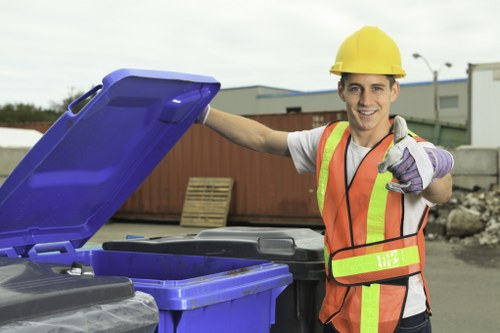 Emergency procedures, reporting and insurance compliance. An insured waste disposal company maintains clear incident reporting procedures, accident registers and near-miss logs. Prompt reporting helps insurers and clients understand causes and remedial actions. Contractors also have contingency plans for spill response, fire, and vehicle collisions. These plans are tested through drills and feed back into both training programmes and the evolving risk assessment process.
Documentation and audit readiness are important markers of a quality insured bin collection service. Keep copies of public liability certificates, employers’ liability, vehicle insurance and environmental cover available on request. Regular internal audits and third-party inspections help maintain standards and can lead to improved terms with underwriters. Insured rubbish companies that maintain high documentation standards show they take safety and compliance seriously.
Choosing an insured waste company for your commercial needs in Bishops Stortford means prioritising vendors who can demonstrate comprehensive cover, documented staff training, consistent PPE use and a mature risk assessment regime. A well-run insured rubbish removal company will reduce operational disruption, protect your staff and customers, and limit the financial consequences of incidents.
Summary assurance: By insisting on an insured waste disposal company with clear public liability, robust training programmes, properly issued PPE and a transparent risk assessment process, commercial clients secure both compliance and peace of mind. These safeguards are the hallmarks of a professional, responsible partner in commercial waste management.
